


blog
What distinguishes human beings
In parallel with constantly learning more about AI, I’m reflecting on my learning from an interview and a Masterclass offered through Mind in Mind by Allan Schore, psychologist and researcher in the field of neuropsychology, entitled ‘Right Brain, Affect Regulation and the Emotional Self). Part of what distinguishes us as human beings from other living beings (and indeed from AI) is our capacity to not only to reflect (a cognitive process), but also to be reflexive (using our cognitive, emotional and somatic capabilities), as well as our capacity and our profound need to relate to, to connect with, and to be seen, acknowledged and understood by other human beings with compassion.
Building blocks of human behaviour
In psychologist Harry Harlow’s surrogate mother experiment, Harlow ‘took infant monkeys from their biological mothers and gave them two inanimate surrogate mothers: one was a simple construction of wire and wood, and the second was covered in foam rubber and soft terry cloth. The infants were assigned to one of two conditions. In the first, the wire mother had a milk bottle and the cloth mother did not; in the second, the cloth mother had the food while the wire mother had none.
In both conditions, Harlow found that the infant monkeys spent significantly more time with the terry cloth mother than they did with the wire mother. When only the wire mother had food, the babies came to the wire mother to feed and immediately returned to cling to the cloth surrogate.
Harlow’s studies inform the scientific understanding of the fundamental building blocks of human behaviour.’
For more information on what underpins our very existence, we need only turn to the ‘still face experiment’. ‘In this experiment an infant is exposed to a severe relational stressor: The mother maintains eye contact with the infant, but she suddenly totally inhibits all vocalization and suspends all emotionally-expressive facial expressions and gestures. According to Tronick (2004), the infant’s confusion and fearfulness at the break in connection is accompanied by the subjective response, “this is threatening.” This stress response is then followed by bodily collapse, loss of postural control, withdrawal, gaze aversion, sad facial expression, and self-comforting behaviour.’ The infant’s response externalises their inner experience and conveys vividly the distress of the loss of connection. The same distress will occur in adults, but may be manifested differently.
Relationship
In executive coaching, sustainable change occurs primarily because of the client’s relationship with the coach, a relationship which enables trust, psychological safety, connection, reciprocity, and care. In leadership, the same phenomena – enabled in a healthy relationship between leader and led – nurture productivity, creativity, innovation, retention, and competitivity.
Emotionality
As Schore sets out there is a central role for the recognition of emotions, the expression of spontaneous and intense emotions, and the nonverbal communication of emotions in human survival itself. Our emotionality enables our ability to rapidly respond to danger and other urgent problems. It processes environmental challenge, stress and pain and manages self-protective responses such as avoidance and escape.
AI, AI, AI
In recent weeks I’ve been the recipient of what has felt like an exponentially-expanding torrent of messages, announcements, broadcasts and news about AI (not least of which is the view that the human race may be extinct in 10 years, and news of the attack by OpenAI agents on the Hugging Face platform, on which the machine learning community collaborates on models, datasets, and applications).
AI and relationship
It feels to me that there’s a danger of investing in AI the belief that it can do and be everything, including relating, offering warmth and nurturing.
A relationship with another human being is fundamentally different from what one could possibly call a relationship with an AI. A human, particularly an experienced coach, will notice the flicker of a smile, a momentary furrow in the brow, a sigh, a stiffening of posture. They will enquire with curiosity into the client’s experience in that moment and will (unlike AI – at the moment, at least) join the client in exploring the meaning of that experience. They will notice in relationship with the client – being curious about how things are happening in the way they are, and about the wide implications of the systemic and relational factors at play. They will call on their own emotional and somatic experience in the moment to help inform them about what might be happening for the client.
An AI may notice or observe these changes, but it will not have anything resembling a lived, experienced or embodied understanding.
Most importantly, an AI couldn’t be attuned to a human being, and it couldn’t relate to a client’s inner experience, or join the client in a joint exploration to make meaning together. An AI wouldn’t feel any emotion in or without the presence of another, as a human would. Neither can it experience or demonstrate vulnerability.
What now?
Amidst all the excitement about AI and its exponential growth in capability, it feels important to be vigilant: to question what it gives us, to remember that it is not human (the clue is in the label ‘artificial’), and to remember that our everyday interactions with human beings are actually life-giving and help ensure our survival.
Photo by notorious v1ruS on Unsplash
Humans, AI and the dividing line between them
Part of what distinguishes us as human beings from other living beings (and indeed from AI) is our capacity to not only to reflect (a cognitive process), but also to be reflexive (using our cognitive, emotional and somatic capabilities), as well as our capacity and our profound need to relate to, to connect with, and to be seen, acknowledged and understood by other human beings. There is a central role for the recognition of emotions, the expression of spontaneous and intense emotions, and the nonverbal communication of emotions (see Schore, 2003a, 2003b for references) in human survival itself. It feels to me that there’s a danger of investing AI with the belief that it can do everything, including relating, offering warmth and nurturing. A relationship with another human being is fundamentally different from what one could possibly call a relationship with an AI. Most importantly, an AI couldn’t be attuned to a human being, and it couldn’t relate to a client’s inner experience, or join the client in a joint exploration to make meaning together. An AI wouldn’t feel something in the presence of another as a human would.
Read more »
Artworks in Vantablack: void, emptiness and fertility
An exhibition of work by Anish Kapoor at the Hayward Gallery in London features works in Vantablack – the blackest known substance in the world, a super-black nanomaterial that absorbs over 99.96% of visible light. There are shapes that seem to be void, with no sense of depth or perspective - they are rich, inviting and intriguing. Being present to these experiences inevitably and directly invites me to be with ‘what is’: I can’t impose or take for granted any of my own interpretations or assumptions. It reminds me that when I’m with a coaching client, I can’t and mustn’t take anything for granted about them, their perspectives or their interpretations. Far from viewing the void as nothingness, Kapoor sees it as pregnant emptiness - which brings to mind for me the Gestalt principle of the Fertile Void: John Leary-Joyce talks of ‘the paradox that someone or something could be simultaneously empty or full….. staying with the void of the ‘not knowing’ allowed the space and time for something new and amazing to emerge’.
Read more »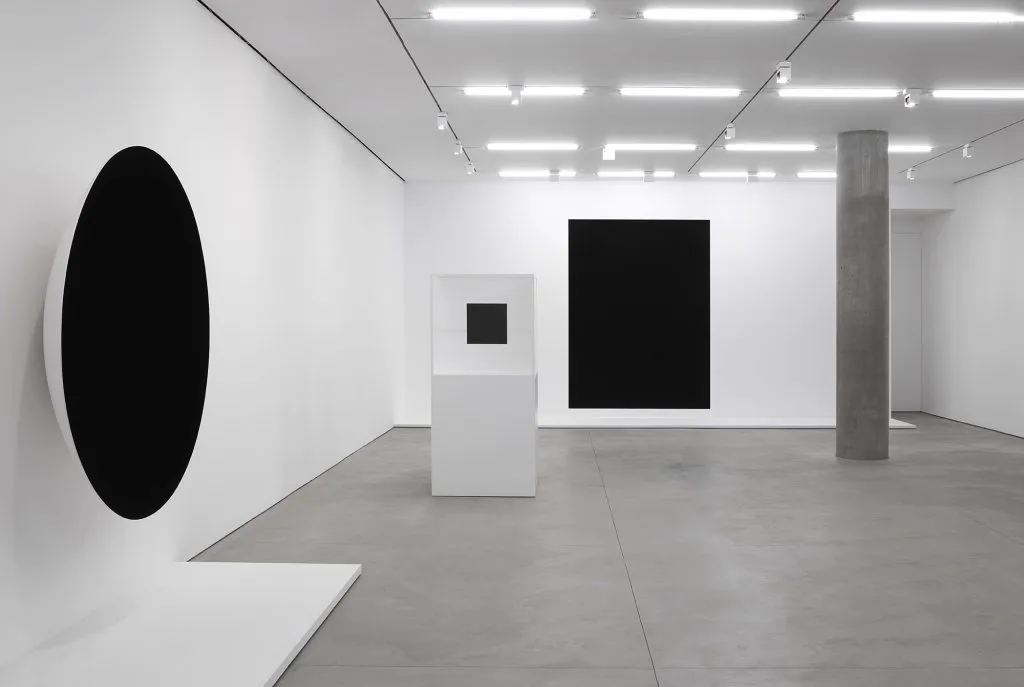
Stuck
Sometimes, as much as people want to change – and are sometimes desperate for change - they remain stuck in their existing patterns. They may not even see themselves as stuck: it just feels familiar, whether comfortably familiar or uncomfortably familiar. The chaos of what’s known or familiar is more attractive than the uncertainty of what’s new, different, unfamiliar and unknown. There is a variety of approaches that a coach might use to facilitate people to move through their stuckness. Amongst the best known is Immunity to Change, by Robert Kegan and Lisa Lahey, and the Gestalt Paradoxical Theory of Change. While an individual is experiencing stuckness, what contribution to staying stuck does the emotional experience of the stuckness have? Curiosity about what’s going on in the emotional, somatic and cognitive experience of not changing itself seeds change.
Read more »
Communicate, communicate, communicate – and care
Surgeons spend decades mastering extraordinary expertise, skill and knowledge. But emphasis on simply the acquisition and implementation of technical knowledge limits understanding of the patient experience and wellbeing, and the role of that in the resolution of the clinical problem. An intrinsic part of recovery is the patient’s sense of wellbeing, of security, of trust, of being seen, and of being communicated with. It’s about minimising any surprises for the patient in the wilderness of their unknown. The same is true for any leader taking people through change. Uncertainty, anxiety, and feeling abandoned have a detrimental effect on recovery, on the perception of pain, on complications and on fatigue. Negative emotions such as abandonment and worry decrease blood flow to surgical sites, amplify the perception of pain, and suppress the immune system. There can be significant delays to wound repair. If the surgeon demonstrates genuine empathy, respect, compassion and interest in the patient’s experience, that patient will feel safer and more trusting. This lowers stress chemicals, allowing muscles to relax, heart rate to stabilise, and deep tissue healing to begin. As they start their journey, what the patient needs is clear information about the weeks ahead – what to normally expect, what possibilities might arise, what to be concerned about, the steps they can usefully take, and how to manage it all.
Read more »
Joy in leadership
You don’t hear much about joy in leadership. My own moments of joy include witnessing a client discovering and internalising an insight which opens a door for them to the possibility of change. Being with a client who dares to say what’s true but who has been too scared to articulate it till then – and who feels liberated by the articulation. Introducing a person to a new experience or a new perspective that they feel enriched by. Seeing something beautiful in nature. In my own leadership, as a co-founder of Coaching through COVID I experienced moments of heightened joy at the time. In the difficult moments – particularly of stress, pressure, exhaustion and overwhelm – joy offered me a resource. It built my resilience, reminded me of why I was doing what I was doing, and sometimes suggested a reset, a re-finding of perspectives. My experience of joyous leadership has helped take me through tough times, multiple pressures, dilemmas, uncertainties and seemingly impenetrable complexities. It has enabled for me resilience, connection, creativity, energy and vitality. Elements of joyous leadership include focusing on facilitating other people’s development and growth, and their fulfilment and satisfaction. Being present and living one’s values play an important role.
Read more »
Invisible strength: Building Emotional Resilience
Focusing only on accomplishing is not enough on its own to help ensure that our conscious and unconscious decisions and judgments go beyond knee-jerk reactions or habits. Like building a house, the key work goes on underneath what shows on the surface - silently and invisibly. Our physical sensations and our somatic responses are the real basis of how we feel emotionally, how we’re responding, and the meaning we’re making of a situation. These somatic responses are therefore where we really need to look if we’re to mine the insights inherent in a given situation. The programme on Building Emotional Resilience, run by Adeptify, explores the emotional foundations of resilience, building the awareness that enables conscious choice in the sense of Bob Kegan’s Subject-Object shift.
Read more »
Communication - and presence
Thank you for this quotation, Daniel Stane and Nicola Shearer, and the Compassionate Leadership Certification Training that you’re leading with such insight. Communication goes beyond words Greenspan was right – and we can become more aware of aspects of our speech, behaviour and the meaning that others make of what we say, and so communicate in a way that might help our intended meaning land more accurately. Inherent meanings can become clearer with an appreciation that communication goes far beyond words alone, including the deep and wide underpinnings of any human interaction, the emotional connection (or its absence), and the impact on both speaker and spoken-to. I’m thinking, for example, of a time when I asked what I thought was an objective, simple question about an individual’s motivation for a particular choice, and being met with a totally unexpected verbal attack on the fact that I was criticising them (which was not remotely my intention: rather my question came from curiosity). Author, international speaker and neuroscience educator Sarah Peyton writes on Resonant Language: ‘I had viscerally experienced the gap between what I had meant to say and what had been received…. What I've come to understand…. is that the gap is pretty much never about content…. it is the words themselves that matter. Certain words and phrases activate threat responses in the brain and body before we've even consciously registered their meaning. Others land softly, opening something rather than closing it.’ The autonomic nervous system I agree with Sarah Peyton as far as she goes. The impact of language on our autonomic nervous systems is huge, as Stephen Porges’ polyvagal theory, and particularly the neuroception of safety, demonstrates: ‘we naturally, and unconsciously, send signals of safety or danger to each other which either encourage or discourage the reduction of psychological and physical distance’. Facial expressions in their infinitely rich variety (including smiling), head movements, and vocal intonations, pace, volume and rhythms offer us further illumination. And the inner state that we bring to any interaction is core to what we convey – and core to how it’s received. Physical context Inner state is influenced by the physical context, as well as by the history that we bring with us, which will, in turn, influence our interpretations, assumptions, underlying beliefs, and fears about the words we hear and the words we use. These cognitive factors find expression in our emotions, including what we’re triggered by – instantaneous reactions rooted in our back stories. Stage of development The way we make meaning - the lens that we look at the world through - is also heavily influenced by the stage of adult development we’re currently in. Through this lens we will see and experience the inevitable complexity of the world in a range of ways: we may see specific situations in terms of how they conform with existing rules and norms, or what they convey to us in terms of excellence, expertise and logic, or what they represent in terms of reaching goals and achievement, or what they enshrine in terms of meaning and purpose, or how they sit in a systemic context and their relationship to personal and organisational transformation, or what they represent in terms of the inherently interdependent nature of the world. The way we ‘hear’ the meaning of Alan Greenspan’s (or anybody’s!) words will depend on our – and their - stage of development. Presence The most powerful and potentially generative factor in this whole story for me is presence: ‘being with’, being totally there, embracing the moment of experience. As Zen Master Thich Nhat Hanh put it ‘Being present helps us touch and look deeply into whatever is there’: we see and accept what is there, without any agenda, interpretation or bias, or interference of our own thinking. Presence helps to close the gap of misunderstanding when I think I’ve heard something you don’t think you’ve said. As both leaders and led we need to be deeply present to what the other is expressing, so that we actually do hear more of what they say. I am beyond fortunate to have colleagues who offer, and who embody, this gift of presence, which, in my experience, is intrinsically bound up with compassion and love. Thich Nhat Hanh highlights that you can only love if you are there for the other person, and I believe this applies also to compassion. The impact on me of being deeply heard without judgment means that I feel correspondingly deeply connected and safe enough to be completely honest, and to perceive my embodied experience and my thinking in new and powerful ways, which means I can shape more creative perspectives. I feel totally engaged, I experience heightened vibrancy, I have deep motivation to collaborate and create together – and that, of course, can be a rich path to fertile productivity. The gift of my colleagues’ presence means that I am more confident at a visceral level that they have indeed heard what I meant. This alone epitomises leadership at its best: imagine a world in which leaders are truly present to those around them. That would indeed be transformational. “ I know you think you understand what you thought I said but I'm not sure you realize that what you heard is not what I meant” . Greenspan was right – and we can become more aware of aspects of our speech, behaviour and the meaning that others make of what we say, and so communicate in a way that might help our intended meaning land more accurately. Inherent meanings can become clearer with an appreciation that communication goes far beyond words alone. And the inner state that we bring to any interaction is core to what we convey – and core to how it’s received. Inner state is influenced by the physical context, as well as by the history that we bring with us, which will, in turn, influence our interpretations, assumptions, underlying beliefs, and fears about the words we hear and the words we use. The way we make meaning - the lens that we look at the world through - is also heavily influenced by the stage of adult development we’re currently in. The most powerful and potentially generative factor in this whole story for me is presence: ‘being with’, being totally there, embracing the moment of experience. As both leaders and led we need to be deeply present to what the other is expressing, so that we actually do hear more of what they say.
Read more »
The seesaw of leadership and decision-making
We live in a world in which polarisation is increasingly present and increasingly encouraged. In leadership, it’s particularly dangerous, partly because it can lead to decisions which exclude important factors that are inherent in that decision-making but invisible in the rigidity of the process. Aligning firmly to a polarity or an assumption means that we’re closing ourselves in, locked and blinkered, inside a box to which we’ve thrown away the key – and we aren’t asking any questions or engaging our curiosity in enquiry. That choice to be blinkered also inhibits growth and development. Opening the window more widely may be a little (or very) uncomfortable because it may challenge what we thought was reality. But if we allow that discomfort, embrace it, accept it and approach it in a spirit of curious enquiry, something new can emerge. Welcoming an engagement with possibilities can lead to a richer, more vivid, enriching and multi-faceted picture, more well-informed options, and therefore a much more reliable and resilient basis for decision-making.
Read more »
Light, action and expression
The exhibition Wayne McGregor: Infinite Bodies features – amongst other exhibits - dancers from Company Wayne McGregor rehearsing, performing, and experimenting in an interactive three-dimensional installation. Two dancers both performed and became instruments, each on one side of a brass grid of 10,000 LED lights that reflected and echoed the movements of the dancers (and of the visitors). I was perhaps watching – and was part of – a demonstration of, or metaphor for, some of the features of the best leadership: meticulously prepared so as to be precise in enactment and yet sensitive in response, capitalising on the potential of technology and yet deeply human, both collaborative and independent, responsive to what was emergent and yet clear on boundaries, sensitive to what lay beyond those boundaries and reflective of what was happening within them. I’m reflecting too on the nature of movement, flex and dynamism, and their role in delivering, assuring and maintaining leadership, not to mention the infinite need for creativity and light (both literal and figurative).
Read more »Compassion isn't always easy
For Rasmus Hougaard and Jacqueline Carter, wisdom and compassion need to be combined if optimal leadership is to be possible. Compassionate leadership boosts employee engagement, satisfaction, and well-being, leading to higher productivity, better retention, and improved financial performance, by fostering trust, collaboration, and psychological safety. However, it can be difficult to be compassionate as a leader or as a colleague, particularly when another individual’s behaviour or speech evokes our fear of being harmed or hurt (or worse) on a personal or community basis, when that behaviour or speech means we feel under attack or it conflicts with our deeply-held values, or when we feel that the compassion we’re showing in such a situation is met with resistance. There is considerable resource to call on when we struggle with compassion: being fully present, respecting ancestry, being curious, exercising tough compassion and withdrawing.
Read more »

Click here to receive the occasional interesting e-mail
Click here to receive my free report for coaching sponsors:
Evaluating coaching
Click here for my free report for coaching clients:
How to choose the right coach
You can call Lindsay on
+44/0 20 7112 7001 or
click to send her a message