blog
It’s as though someone has taken a giant pitchfork and turned the world entirely upside down. We’ve watched from a distance as China, Iran, Italy and Spain have struggled under the weight of a highly contagious virus that has overwhelmed hospitals and healthcare workers, closed businesses and educational institutions, and kept citizens confined inside their homes.
Now COVID-19 is hitting the UK – hard. Reeling under the weight of patients with serious respiratory problems caused by the virus, hospitals are cancelling elective surgery, exhibition centres are being converted into field hospitals – and medical staff are facing an encounter with an illness whose scale and rate of transmission is nothing like anything they’ve ever encountered before. As I write this, three doctors in the UK have already died from the virus. Medical staff are frightened, stressed, anxious, exhausted from working long shifts in a new, uncertain yet threatening context, and in some cases, traumatised. It will get worse before it gets better.
The human suffering on the part of both those being cared for and those doing the caring make it a particular and heartfelt privilege to be part of a team setting up and delivering a scalable programme of pro bono coaching to healthcare workers, on demand and to go on as long as participants want it. Titled COVID-19 Rapid Response Coaching (C19RR), it has started with a pilot at a large London teaching hospital. The programme follows an idea conceived by Mark McMordie, CEO of The Conscious Leader , and briefly described in his post on LinkedIn.
Within the ten days after Mark first expressed the idea in mid-March, a core team of 7 (including a consultant anaesthetist) had been formed, and the first coaching session had been delivered within the anaesthetics department. Further coaching sessions followed, with the programme being rolled out to intensive care, and accident and emergency departments, the intention being to expand to other London hospitals (London because it was the epicentre of the virus at the beginning of its arrival in the UK) and to hospitals elsewhere in the country. Demand is growing exponentially.
The core team is fuelled by The Conscious Leader, the Academy of Executive Coaching, Lee Hecht Harrison, Coaching at Work magazine, Visible Dynamics, and Lindsay Wittenberg Ltd. All those on the core team are working intensively to deliver a professional, high-quality coaching programme, supported by supervision, trauma specialists, counsellors and therapists, at speed. Just a few days after the coaching began, feedback from those receiving it has been extremely positive.
The expectation is that take-up of the programme will snowball, particularly as the peak of the COVID-19 wave starts to hit – and perhaps even more so as it leaves in its wake what is expected to be distress, exhaustion, and mental health problems.
The ethos of the programme, reinforced constantly in the interactions of the core team, is reflected in compassion, mindfulness, deep mutual respect and psychological safety, and a desire to be of service above all. There are no commercial interests in it, and all materials are shared generously without any exclusive ownership being claimed. COVID-19 is a one-off to date (or at least the first of its kind in quite this way) – and the privilege of being part of this team is something I have never experienced before in any team. It is a tribute to the deeply human philosophy that prompted Mark to first come up with the idea, and it is being recognised in the experience that professional coaching is facilitating: above all, deep presence on the part of the coach, and the capacity to listen and hear whatever needs to be expressed.
If you’re an NHS worker and you’d like to sign up to be coached, please click here
If you’re a coach and you’d like to offer your services on this programme, please complete and submit this coach application form
Photo by Marco Verch via Compfight
Pro bono NHS coaching for COVID-19
In COVID-19, NHS medical staff are facing an encounter with an illness whose scale and rate of transmission is nothing like anything they’ve ever encountered before. They are frightened, stressed, anxious, exhausted from working long shifts in a new, uncertain yet threatening context, and in some cases, they're traumatised. The pro bono coaching programme COVID-19 Rapid Response Coaching (C19RR), set up in mid-March, is a professional, high-quality coaching programme, supported by supervision, trauma specialists, counsellors and therapists, and is being rolled out at speed. It has started with a pilot at a large London teaching hospital, and demand is growing exponentially.
Read more »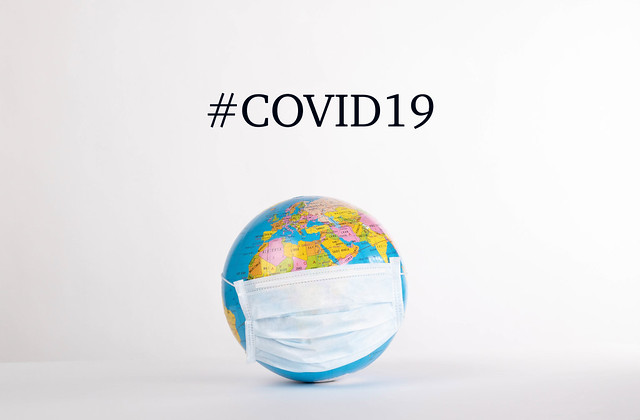
Never enough time
The underpinnings of clients' 'too little time' often turn out to be something from a completely different source, such as patterns related to taking responsibility, unclear priorities or unclear purpose, being distracted by the short-term rewards of 'helping', or aiming for perfection. The costs of striving to fit an unrealistic amount of work into too little time can include stress and exhaustion without ever feeling you've got anywhere. So struggles with time are often actually struggles with embedded patterns of thinking, behaviour and loyalties. Gaining insight into those patterns and so giving oneself more choice is the key - and fundamental to that is taking time for honest and courageous reflection, either alone or with a skilled coach.
Read more »
Seeking momentum
For momentum to build and sustain, whether for growth, cutting costs or increasing profit or benefit, organisations need their people to be aligned in their purpose and focus, and they need their leaders to inspire them and keep them on track. Momentum seems to me not be a linear process, but rather a complex process – and leaders sometimes forget to what extent the pace and the momentum inevitably create disruption and turbulence, both of which inhibit the momentum. The effort to achieve momentum may be experienced as turbulence for some time before there’s any sense of things settling into a pattern, and particularly any sense of wellbeing with and within that pattern. People struggle to build momentum while things feel turbulent or unstable: momentum and turbulence are uneasy companions. Leaders need to anticipate this process as part of their planning for the momentum they want.
Read more »
Presence and gravitas
Leadership is at least as much about being as about doing - so a leader’s presence and gravitas help resource them to motivate and inspire others. Personal presence is most obviously about authenticity, integrity, non-judgmental awareness of, and openness to, all aspects of one’s environment (internal and external), and acceptance and self-acceptance. Gravitas results in impact and influence through the power of communication and the impact of relationships. It conveys a sense of authority, substance and weight, but also includes humanity and humour. Contributing factors to gravitas are presence, behaviour and expertise – and they are all necessary conditions. In other words, gravitas combines being with doing and communicating.
Read more »
Keeping quiet and carrying on - or finding your voice
When most of us see or hear - or indeed experience - behaviour by our leaders at work that lacks integrity, justice or humanity, our usual response is to keep our heads down and carry on, fearing the penalties if we speak up. When we have an emotional reaction to what we've witnesed, as long as we don’t act, both the injustice and our own lack of action may continue to rankle. So we get caught in a double bind: it’s too dangerous to speak out, and it’s too uncomfortable not to speak out. Speaking up can require significant courage. As an executive coach, I’m privileged to be able to provide a safe space in which leaders engage with the risky process of finding their voices, articulating their own truths, becoming more of who they are – and in the process becoming more effective and compelling leaders, invariably with greater integrity and humanity.
Read more »
Saying goodbye to the glitter
My article 'Saying goodbye to the glitter' has been published in the November 2019 issue of Coaching at Work. When a very high achiever is obliged, or has chosen, to move on from the peak of their career, the experience can be akin to a bereavement. They can experience their sense of identity, their sense of belonging, their sense of meaning and the knowledge that they are making a difference as at risk: they need to recreate their sense of self.
Read more »
The loneliness of the long distance runner
Leaders who are at the peak of their careers, while anticipating or indeed experiencing the fulfilment of achievement, are frequently lonely, isolated and lacking the safety of honest conversations. They feel deeply the pressure of expectation. They have inadequate opportunity amid the intensity of pressure and complexity to have safe conversations in which to maintain or create clarity about what they really want to do. At some point for leaders in all such situations, the need and search for ‘self’ becomes imperative: they need to rediscover - or indeed discover – themselves in order to articulate their choices and manage those choices. They realise they can reduce the loneliness by articulating and sharing ‘what is’ with a compassionate yet challenging coach with whom they feel safe, connected and trusting, and who has no vested interest in their challenge.
Read more »
Influencing through compassion
The need for the leader and the manager to influence effectively has always been important. Now, however, their contexts are becoming more uncertain and more challenging. I’m coming across more instances of lack of integrity at senior levels, and this poses a dilemma for the leader who wants to stand up for either the values which their organisation claims or for their own values. I'm finding that an approach for them which embraces compassion – for themselves and for others – can make all the difference.
Read more »
Trust and safety in coaching
My article 'Trust and safety in coaching' has been published in the September edition of Coaching at Work. When a client trusts their coach they can feel safe enough to engage with their inner world - and a certain kind of magic can happen. The richness of both dialogue and data that is enabled by deep trust can uniquely empower the client to face difficult or energising truths, and can also stretch the boundaries of what they'd previously thought was possible.
Read more »
Seeking purpose - and being part of the whole
Albert Einstein wrote: "A human being is part of a whole, called by us the 'Universe,' a part limited in time and space. He experiences himself, his thoughts and feelings, as something separated from the rest - a kind of optical delusion of his consciousness. This delusion is a kind of prison for us…” This resonates for me as I coach talented senior people who create stellar careers. Some of them realise they feel restricted because their lives don’t integrate what really matters to them. They start asking 'What’s my purpose in getting to the top?’ rather than ‘How can I get to the top?’. This is rich and fertile territory for coaching, which enables an individual, in a risk-free environment, to explore, surface, clarify and articulate what meaning and purpose is for them and to become connected to the bigger whole.
Read more »